
There was a time when a luxury wedding could be measured. More guests, more flowers, more fireworks, a longer list of names on the band’s set list. Today, size is the easiest thing in the world to buy, which is exactly why the couples we speak with have quietly stopped asking for it.
What they ask for now is harder to price and much harder to copy. A moment that could not have happened at anyone else’s wedding. A weekend their families talk about for years. A dinner in a place that, frankly, has no business holding a dinner.
So here is our read on where luxury weddings are heading as 2027 bookings fill. It is drawn from the industry’s latest numbers, from what other planners are reporting, and from what we see every week at the planning table. Each trend comes with our verdict: a passing season, or something that is here to stay.
The news that set the tone this week
On 6 October 2026, WeddingSutra published its Annual Luxury and Destination Weddings Survey, built on responses from 1,045 luxury and destination wedding planners and influencers across 32 Indian cities and 8 overseas destinations popular with Indian families. A few findings stood out to us:
- The palace ceiling. Udaipur’s top palace properties have become unaffordable for many high-net-worth families in peak season, and are now largely accessible only to ultra-high-net-worth families.
- Budgets have moved. For business families with a combined net worth of Rs 300–400 crore, wedding budgets have gone from Rs 2–4 crore before COVID to Rs 5–10 crore now.
- The destination gap. The survey estimates that 50% of ultra-high-net-worth families choose a destination celebration, in India or overseas, for at least their pre or post-wedding events, compared with 12% of high-net-worth families.
- Thailand leads abroad. Thailand remains the top international destination for Indian weddings.
Our reading is simple. When the most famous venues price themselves out of reach, families do not lower their ambitions. They look for a place where the same investment buys an entire world, not a single ballroom. That conversation is happening at our table more often than ever.
1. One-of-one beats bigger
Several planners forecasting 2027 have landed on the same idea: the weddings that matter next year will not win on scale, because scale can be bought. They will win on things that could not exist anywhere else.
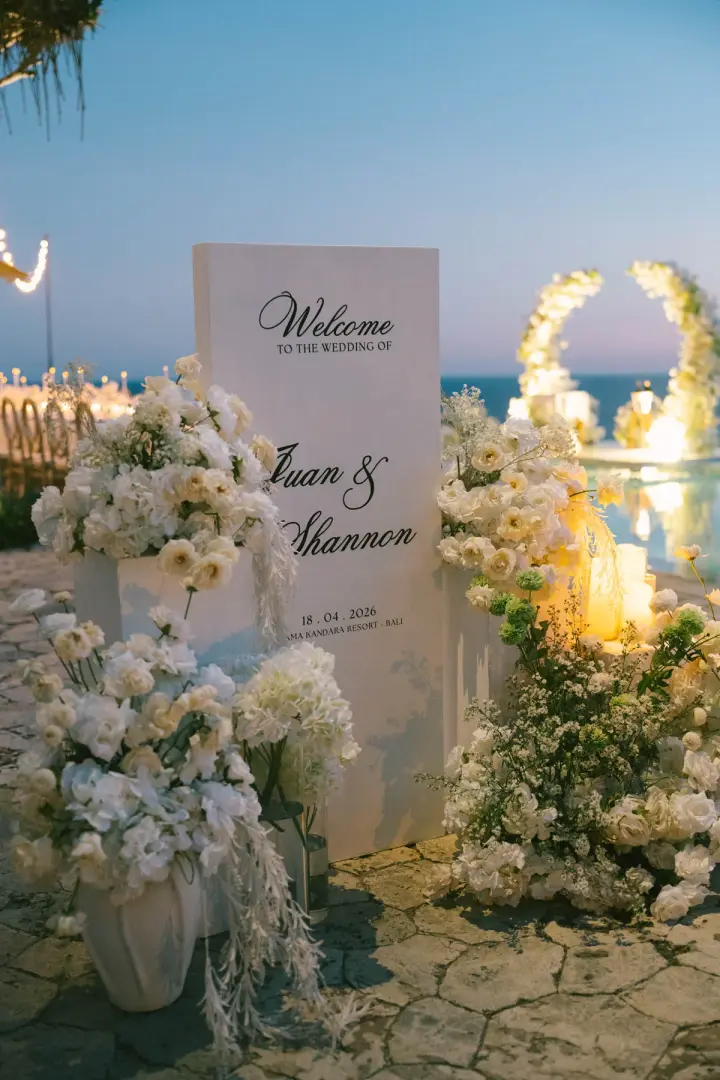
Juan and Shannon exchanged their vows on a glass platform above the Indian Ocean at Karma Kandara, ringed in white florals with nothing behind them but water and sky. No guest at that ceremony had seen it before. None of them will see it again. That is the whole point.
Trend or timeless? Timeless. Uniqueness was always the true definition of luxury. The industry is simply catching up.
2. The wedding becomes a weekend
Arrival dinners, a day built around the destination itself, the ceremony at the centre, a slow farewell brunch. Multi-day celebrations are now one of the most consistently reported shifts across the luxury end of the industry, and we wrote about this rhythm in depth in The Wedding Weekend, Not the Wedding Day.

For Indian families this has never been new; a wedding was always a sequence of rituals with their own weight. What has changed is that every family now expects each chapter to feel like its own world, not a repeat of the night before.
Trend or timeless? Here to stay. Once guests have had four days, one evening feels like a trailer.
3. Dinner goes somewhere it should not
Restaurant-style menus, chef-led courses, and spaces chosen for their drama rather than their capacity. The reception is no longer a hall with a dance floor. It is the place everyone will describe first when they get home.
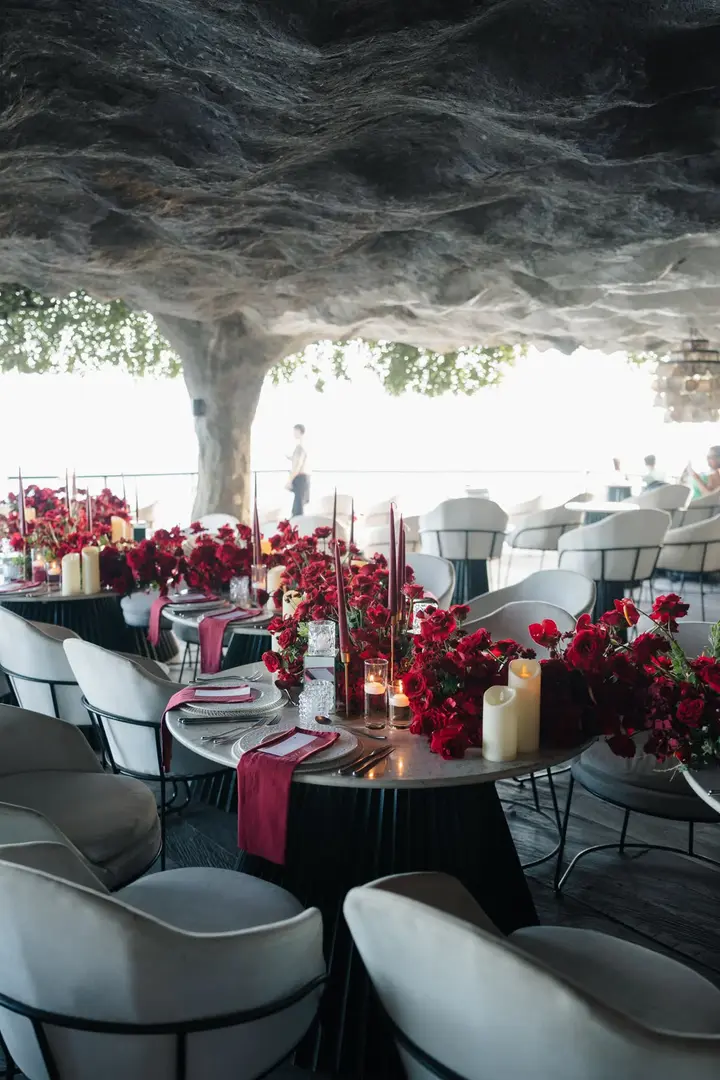
Trend or timeless? Timeless, as long as the food is worthy of the setting. A spectacular room cannot rescue an ordinary menu.
4. The wardrobe arrives in chapters
Forecasters expect brides to treat the day in acts: a ceremony look, a reception transformation, a late-night moment, sometimes from different designers. Heirloom jewellery is being reworked rather than replaced, with a grandmother’s necklace reset into new pieces for the couple.
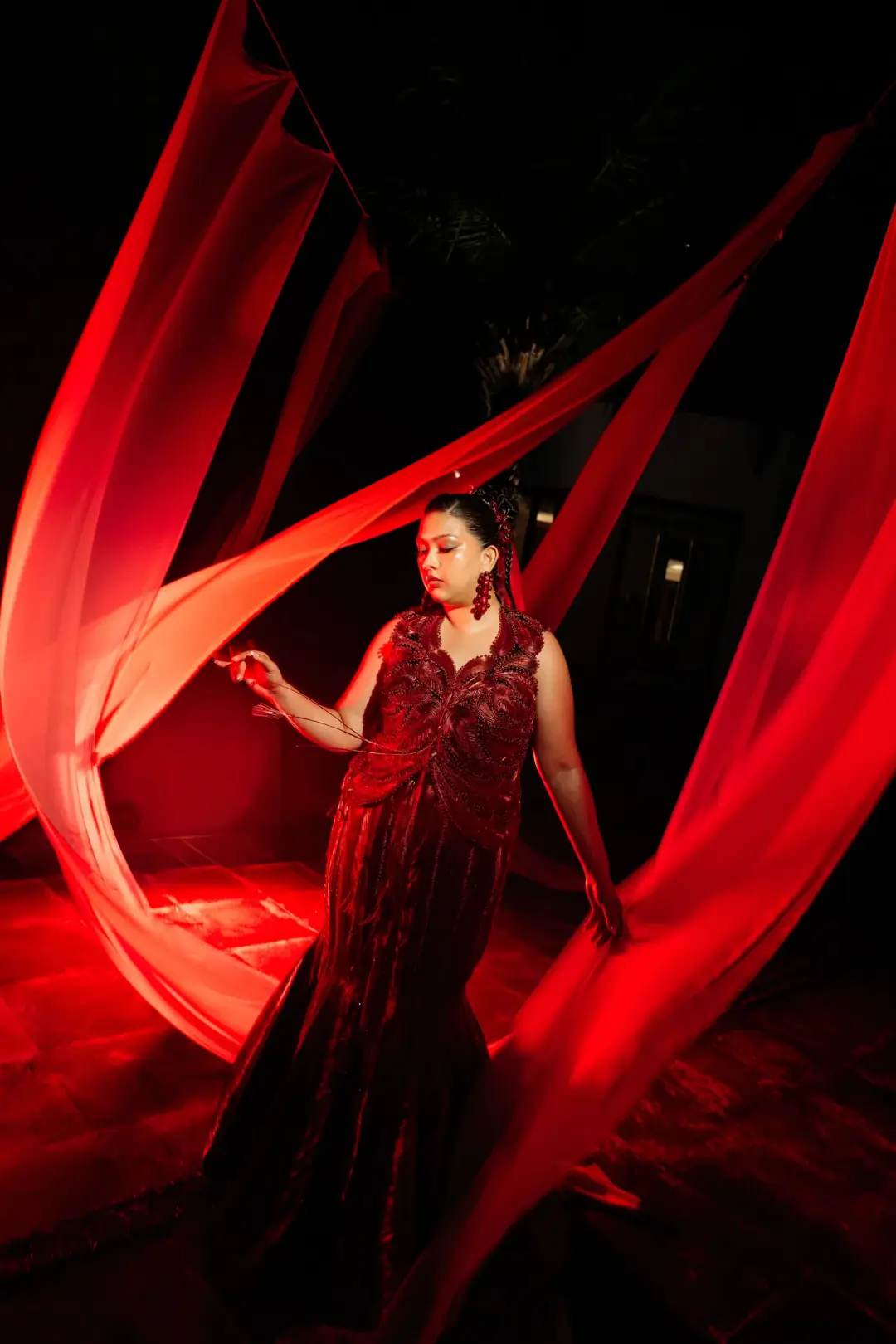
Our advice: design the setting around the looks, not just the other way round. A gown this strong deserves a backdrop built to receive it.
Trend or timeless? Here to stay, especially for multi-day celebrations, where every event is a new entrance.
5. Flowers that climb, hang and frame
Centrepieces are giving way to installation. Florals are being suspended, arched, wound around structures and used to frame a view rather than sit in front of it.
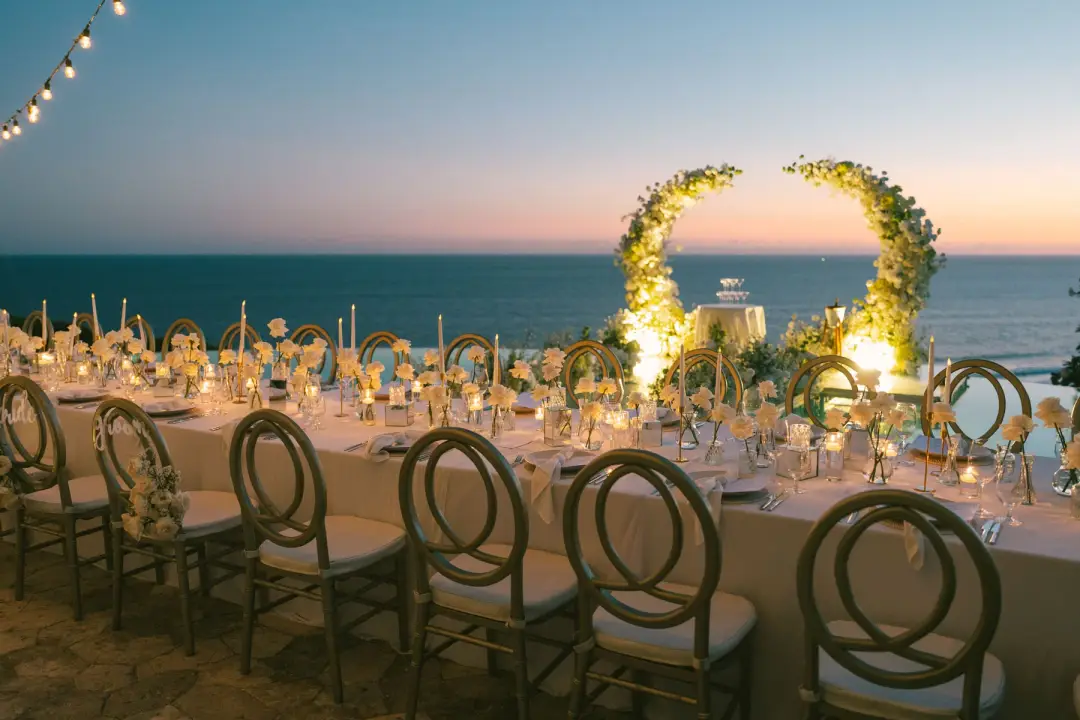
Trend or timeless? The technique is a trend. The principle, that flowers should shape how a space feels, is timeless.
6. The entertainment becomes the story
A band in the corner is background. A performance designed into the evening is a memory. We are seeing more couples commission moments rather than book acts: something that happens to the room, not just in it.
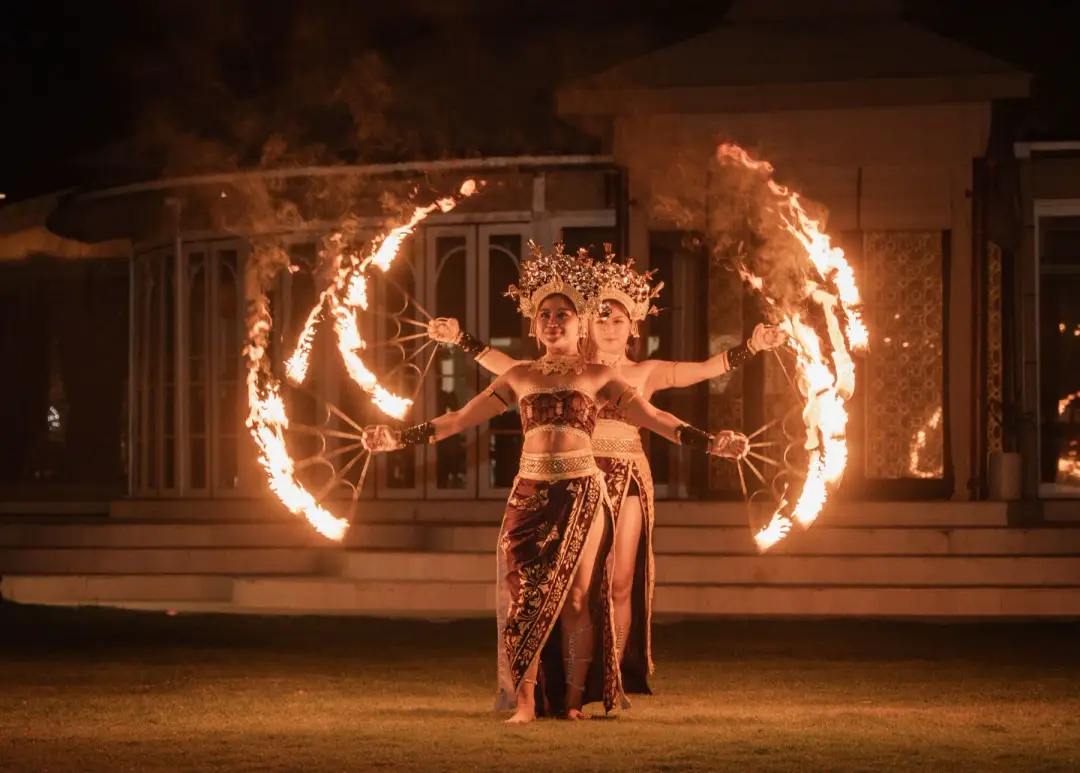
At Diviya and Aayush’s celebration at Samabe, aerial silk performers in feathered headdresses descended over the evening. At Kersten and William’s, Balinese fire dancers took over the lawn as the light went. Neither was a show the guests watched. Both were scenes they were part of.
Trend or timeless? Here to stay, with one rule: the performance has to belong to the place. Fire dancing in Bali means something. Fire dancing anywhere else is a party trick.
7. Fewer guests, more for each of them
Several planners are reporting smaller guest lists with the budget moving from headcount to experience: better rooms, better food, better wine, more private spaces. WeddingSutra’s survey points the same way for non-business families, where a slimmer, smarter format is gaining appeal.
This is not about spending less. It is about deciding that every person in the room should feel like the wedding was planned with them in mind.
Trend or timeless? Timeless. The guest who feels personally looked after is the guest who remembers everything.
8. Everyone is filming, so give it a brief
The survey also notes that demand for wedding content creators surged in 2026. We understand why: families want the story told the same week, not three months later. But a wedding is not a production set, and guests notice when it starts to feel like one.
Our approach is to brief content creators like any other part of the design: where they stand, which moments they own, and which ones belong only to the people in the room.
Trend or timeless? Here to stay. The art is in making it invisible.
Five questions to ask before you book anything for 2027
- What could only happen at our wedding? If the answer is nothing, keep talking before you sign anything.
- How many days is our celebration, really? Plan the guest experience across all of them, not just the ceremony.
- Where will we eat, and why there? The most memorable receptions are chosen for feeling first and capacity second.
- Who is on our guest list, and what will each of them experience? Fewer guests can mean more of everything for each one.
- Who holds every thread? The more ambitious the celebration, the more it matters that one team sees all of it, from the first enquiry to the final dance.
Our view from Bali
Luxury in 2027 is less about excess and more about authorship. Couples want to be able to point at every part of their celebration and say: that was ours, and it could only have been ours.
That is the work we love most. If you are beginning to imagine yours, the Dream Builder is a gentle place to start, and a private application is the first step to a conversation with the founders.
Source: WeddingSutra Annual Luxury and Destination Weddings Survey 2026, released 6 October 2026 via Business Wire India. Wider 2027 trend observations reflect published planner and designer forecasts alongside our own experience.
