
A single-day wedding has a dress. A celebration across several days has a wardrobe, and it deserves the same care as the venue and the menu. Every event is a new entrance, every setting a new backdrop, and every look has to survive heat, sand, stairs and a dance floor.
Here is how we help families plan it, with a few lessons that only become obvious once you have watched a hemline meet a beach.
Map the looks to the story first
Before anyone visits a designer, write down the shape of the celebration: every event, where it takes place, what time of day, and how it should feel. Then assign a look to each one.
For a multi-day Indian wedding, that list often reads something like:
- Welcome evening. Relaxed, elegant, made for greeting every guest.
- Haldi. Traditionally yellow, and meant to get messy. Wear something you are happy to see covered in turmeric and petals.
- Mehndi. Comfortable enough to sit still for hours while the henna is applied, with sleeves that keep the hands free.
- Sangeet. Built for movement and for light. This is the night for sparkle.
- The ceremony. The look that carries the most meaning, often the most heritage.
- The reception. The after-dark entrance; often the most dramatic look of all.
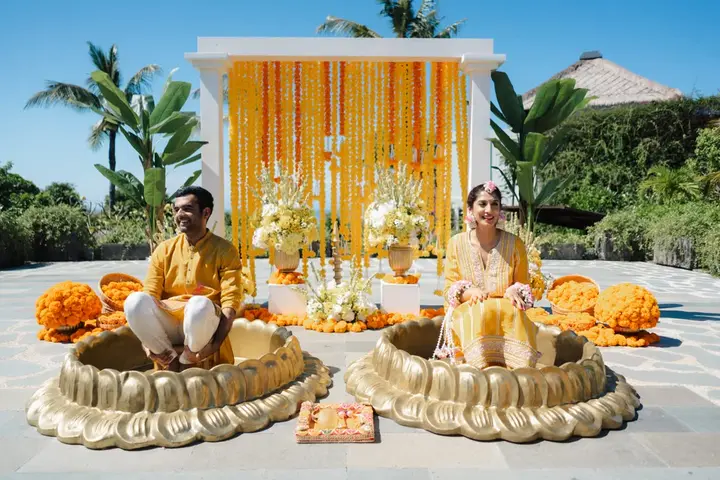
Once the map exists, every other decision gets easier: what to commission, what to borrow, which jewellery goes where, and how many changes the day can realistically hold.
Dress for the ground, not just the room
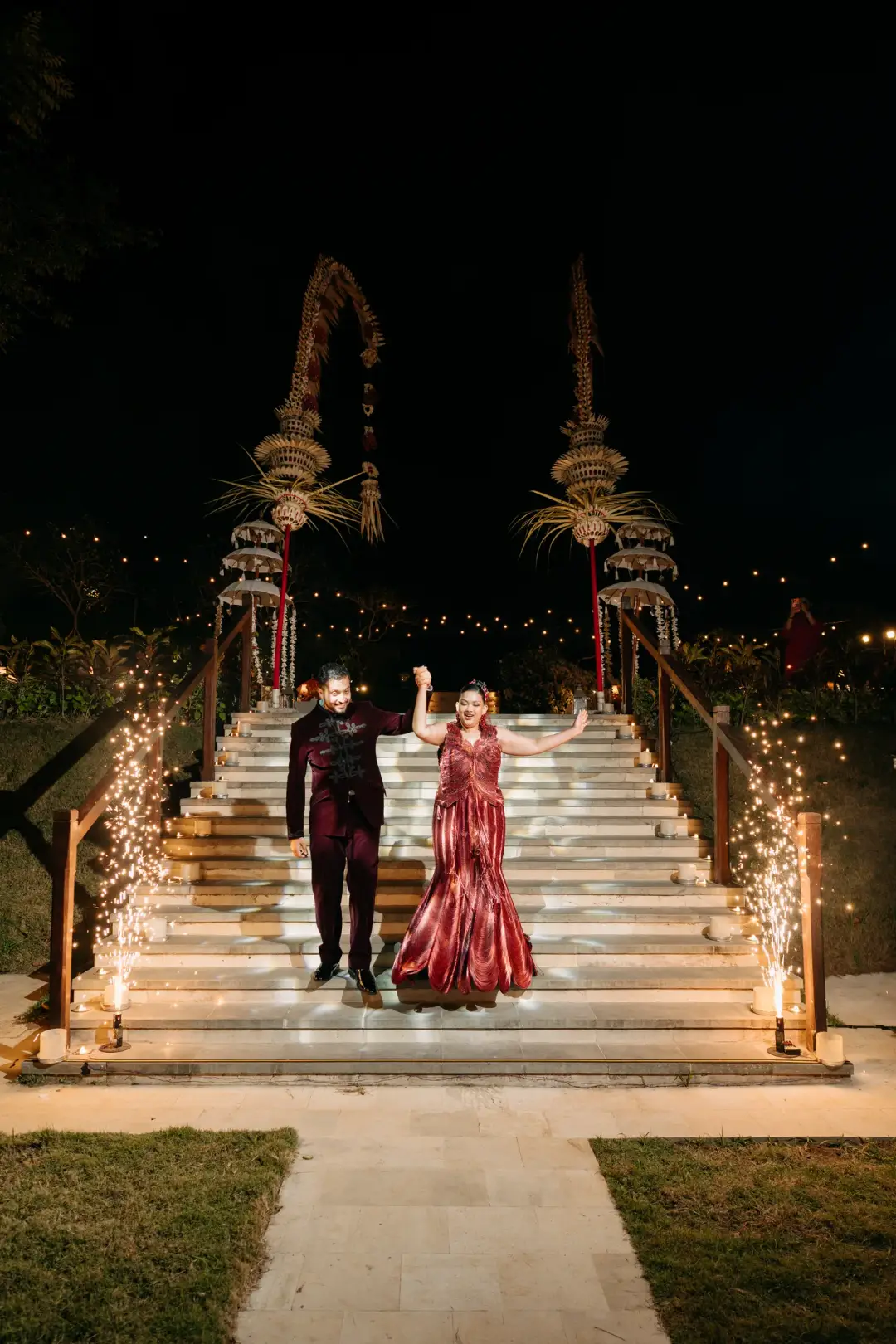
This is the lesson most couples learn too late. In Bali, your celebration might move across sand, lawn, stone steps, a glass platform and a dance floor, sometimes in a single evening.
- Sand swallows heels. Flat or block-heeled shoes for beach moments, with a second pair waiting for the dance floor.
- Lawns do the same, and dew arrives with the evening.
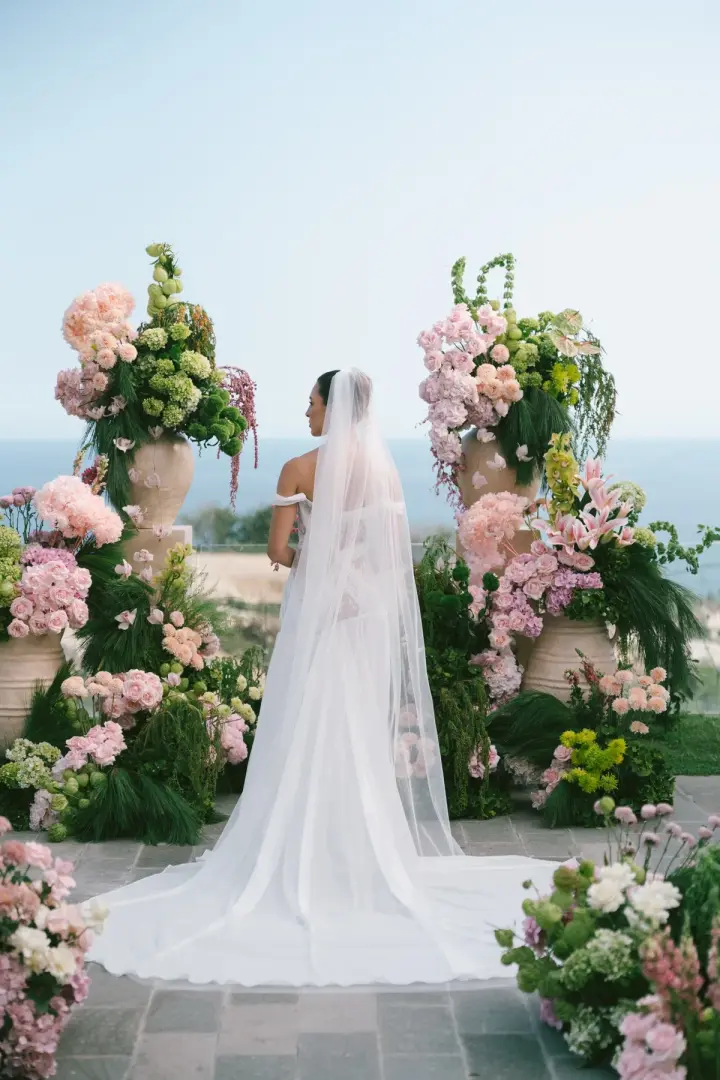
- Long trains gather everything on a beach. Plan a bustle, or a shorter look for the sand.
- Stairs need a hemline you can lift with one hand, gracefully, while photographed.
Respect the climate
Bali is warm and humid all year round. Heavy, layered fabrics that feel perfect in a cool ballroom can become exhausting outdoors at midday. A few principles:
- Save the heaviest looks for the evening, when the air is cooler and the light is kinder.
- Choose breathable linings wherever the outer fabric is heavy or heavily embellished.
- Plan daytime events in lighter fabrics, and in shade where possible.
- Keep a cool, private room close to every event, with fans or air conditioning, water, and a mirror.
Let the setting choose the colour
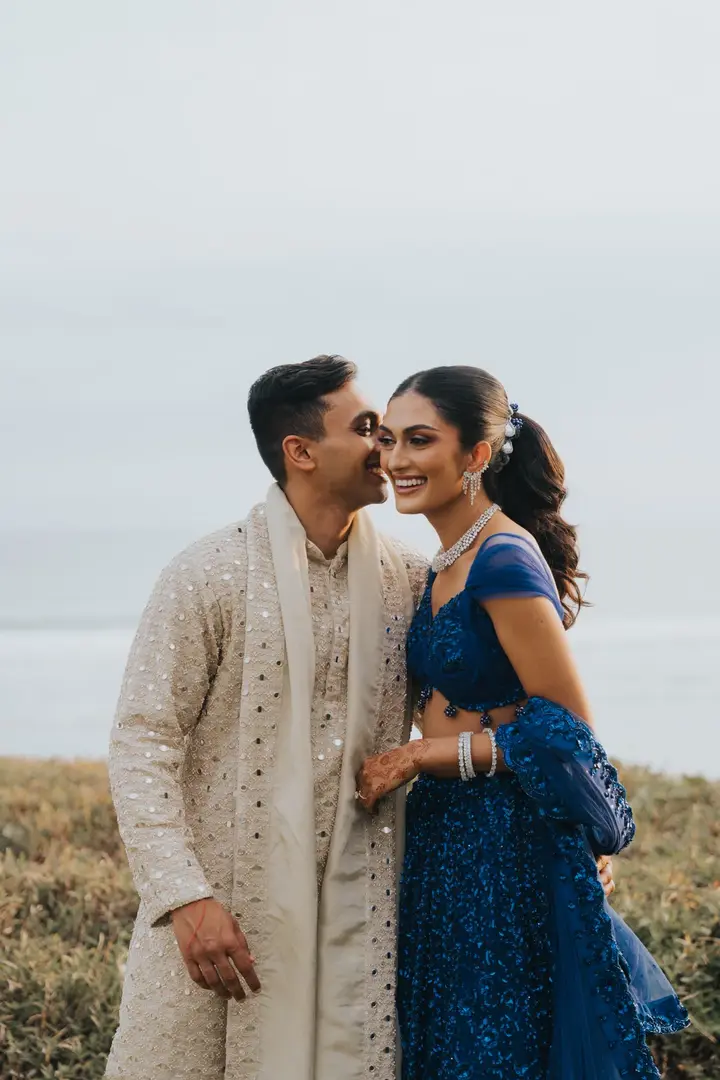
Colour reads differently by the ocean. Strong, saturated tones such as deep red, cobalt and emerald hold their own against a blue horizon and a bright sky. Pale tones glow at golden hour and after dark under warm light.
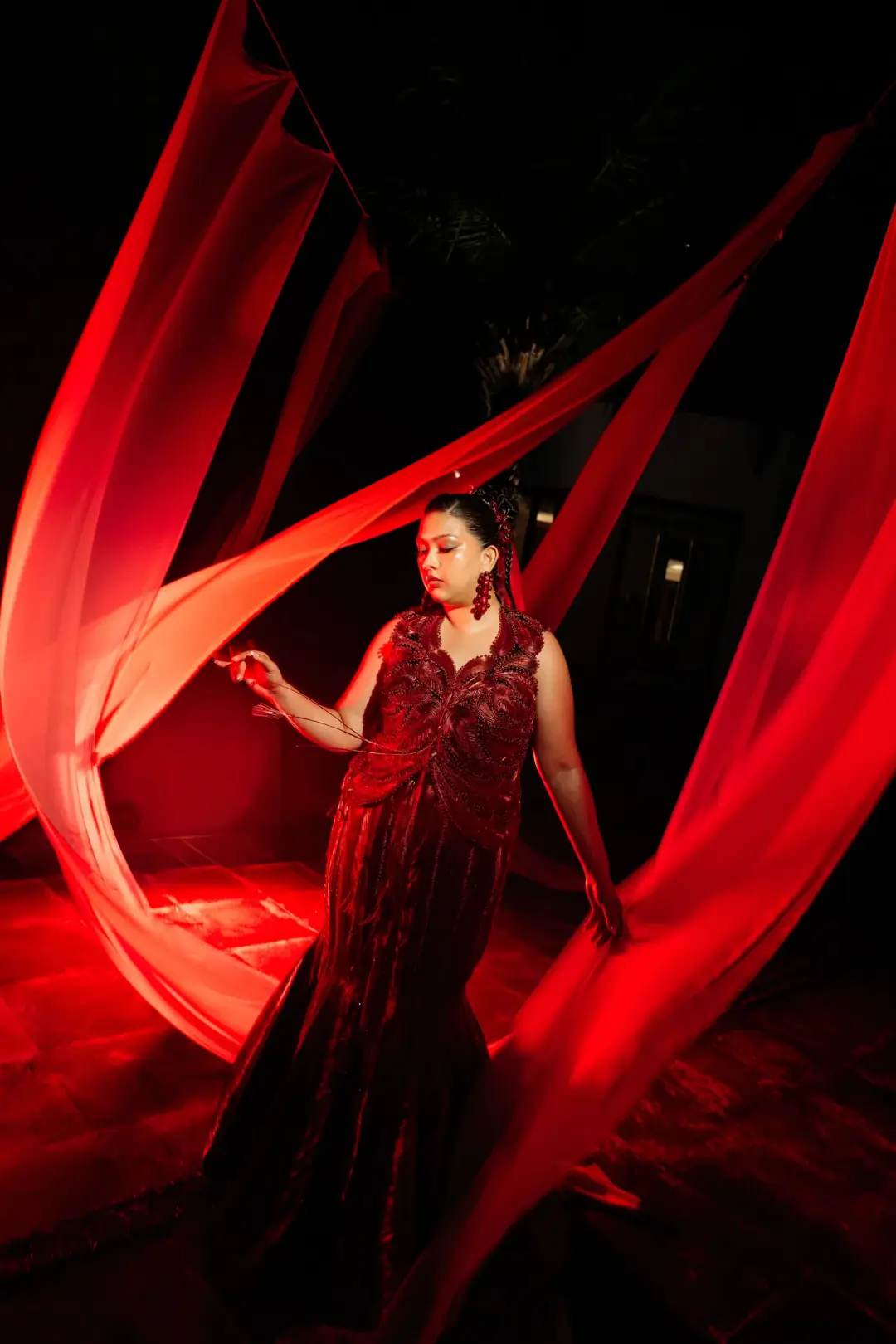
We often design a backdrop around a look rather than the other way round. If you know the reception gown is red, the drapes, the flowers and the light can be built to make that entrance land.
Build a dressing suite, not just a bedroom
Changes take longer than anyone expects, and a destination wedding has no spare wardrobe down the hall. For every celebration, we plan:
- A dedicated dressing suite near each event, with good light, steam, and space for hair and make-up.
- A wardrobe person whose only job is the outfits: steaming, fastening, carrying, and the emergency kit.
- Realistic change times, usually longer than the couple thinks, built into the run sheet.
- A wardrobe run sheet listing every look, its accessories, its shoes and where each piece lives.
Treat the jewellery as its own guest list
Heirloom pieces travel with stories, and sometimes with a great deal of value. Keep a written list of every piece and the look it belongs to, assign one trusted person as its guardian for the whole celebration, and plan where it is kept between events. Forecasters expect more families to rework heirlooms into new pieces for the couple, which makes that list even more precious.
Don’t forget the groom
Grooms get two looks and a pair of shoes far too often. A multi-day celebration is just as much his entrance. A lighter jacket for the daytime, a statement piece for the sangeet, a ceremonial look with real presence, and something sharp for the night.
The quick checklist
- Write the event map before choosing a single outfit.
- Match every look to its ground: sand, lawn, stone, stairs.
- Heaviest fabrics after dark.
- A dressing suite and a wardrobe person for every event.
- A written jewellery list with one guardian.
- Second shoes for every look you will dance in.
A celebration in chapters asks for a wardrobe in chapters. Planned well, every entrance becomes a moment your guests remember. If you are beginning to picture yours, start with the Dream Builder, or read our guide to luxury Indian weddings in Bali.
